
Why Almond Milk Curdles and 4 Pro Fixes for 2026
If you’ve ever stood in front of your milk steamer, eager to craft that perfect microfoam for your latte, only to watch your almond milk curdle mid-steaming — you know the sinking feeling this brings. I recall a morning when I was all set for a beautiful cappuccino, but my almond milk refused to cooperate. It was frustrating, almost like my milk was betraying me at the worst possible moment. That lightbulb moment made me realize I wasn’t alone, and more importantly, that there are concrete fixes to this common annoyance.
Why Almond Milk Sometimes Turns Sour and How We Can Prevent It
Understanding the reason behind almond milk curdling is crucial. It often comes down to the milk’s temperature, pH level, or even the type of almond milk used. Early on, I made the mistake of using a cheaper brand without checking its ingredients or how it reacts under heat. That small oversight led to that dreaded curdling, ruining my coffee and my morning routine. But over time, I learned that with a few small adjustments, you can prevent this issue and enjoy silky microfoam every time.
Is Curled Almond Milk Truly Worth the Hassle?
This skepticism is valid. When I first encountered this problem, I wondered if investing in pricier almond milk or fancy steaming techniques was worth it. Well, the truth is, the solution lies in understanding how to handle plant-based milks properly — and yes, select the right ones. According to recent studies, certain additives and stabilizers in almond milk help prevent curdling, especially when steamed correctly (source: this guide). So, it’s not just hype; it’s about mastering techniques and choosing wisely.
Have you faced this awkward curdling calamity? If so, you’re in good company, and by the end of this post, I promise you’ll have a clear road map to serve up perfect microfoam, every time. Ready to dive into the fixes that will elevate your coffee craft? Let’s get started with understanding what really causes almond milk to sabotage your latte art.
Heat the Milk Properly to Avoid Curdling
Begin by warming your almond milk gradually. Think of steaming as gently waking the milk, not shocking it with intense heat. Use a thermometer to keep it around 140°F (60°C). I once rushed the process, turning up the steamer to max, and ended up with curdled almond milk. Slow, steady steaming yields a smooth, velvety texture. Remember, a rapid increase in temperature causes the proteins to denature and curdle; patience pays off.
Adjust Steaming Technique for Smooth Microfoam
Submerge the Wand Deep and Slightly Off-Center
Insert your steam wand just below the surface of the milk, angling it slightly off-center. This creates a whirlpool effect, similar to a mini tornado, which helps incorporate air evenly. During my early attempts, I kept the wand static, which resulted in uneven foam and stray bubbles. Moving the wand throughout the process ensures a consistent, glossy microfoam.
Control the Steaming Time
Limit steaming to about 20-30 seconds once the milk reaches steaming temperature. Over-steaming causes the microfoam to collapse or turn airy. A quick zap of heat, just enough to warm the milk and create fine bubbles, is ideal. I once overheated during a rush, and the foam separated immediately. Practice with short bursts to fine-tune your timing.
Choose the Right Almond Milk for Better Results
Not all almond milks are created equal. Look for options with minimal additives and stabilizers, which help maintain consistency during steaming. Brands featuring ingredients like carrageenan or thickeners tend to curdle more easily. I switched to a higher-quality almond milk and noticed significant improvements in foam stability. Online guides (like this one) recommend experimenting with milk brands to find the best match for steaming.
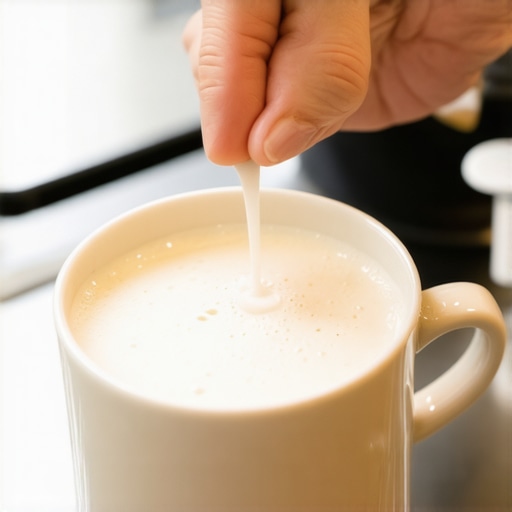
Visual of steamed almond milk at optimal temperature with perfect microfoam formation.
Master Foam Texture with Proper Technique
Hold the pitcher at a 45-degree angle and position your wand near the bottom of the pitcher. Think of it as drawing a gentle figure-eight movement; this continuous motion aerates the milk smoothly. Observe the formation of tiny bubbles, similar to cream cheese spread—these are your ideal microbubbles, creating that lush texture perfect for latte art. I once ignored this and ended with large, airy bubbles that sank quickly, spoiling my latte art attempts.
Practice Pouring with Precision
Once your microfoam is ready, focus on pouring techniques. Start pouring from just above the cup’s center, then gradually lower the pitcher and pour with a steady, controlled flow. Use a slow, deliberate pour to shape your latte art. I often practice with leftover foam, experimenting with pouring speed and angle until I see that beautiful rosette or heart emerge. Precision in pouring converts your microfoam into stunning designs.
Many coffee enthusiasts believe that achieving perfect microfoam and latte art is simply about pouring techniques or expensive equipment, but the real nuances often trip up even seasoned baristas. A widespread myth is that all milk frothers produce the same quality microfoam. In reality, different devices and milk types require tailored techniques; for example, manual frothers may struggle with plant-based milks that contain stabilizers, which can hinder foam consistency.
Why do some advanced steaming techniques sometimes backfire, and how can we avoid common pitfalls?
Advanced baristas know that the temperature at which you steam your milk dramatically influences microfoam quality. Overheating milk can cause proteins to denature prematurely, leading to large bubbles or even collapsing foam, which many overlook. A recent study emphasized that precise temperature control—around 140°F (60°C)—is critical for silky microfoam (source: this guide). Many get confused by the shiny, velvety texture of perfect microfoam and mistakenly believe it’s solely about the steaming duration; in fact, controlling the heat and positioning of the steam wand is paramount.
Another common mistake is neglecting the type of milk used. Many assume that almond, soy, or oat milk can be steamed without adjustments, but each has unique properties. For instance, soy milk tends to curdle more easily if steamed too hot or if its stabilizers aren’t compatible with the steaming process. An essential tip is to experiment with brands and check for additives, as some stabilizers can hinder frothing, making your foam less stable (see expert recommendations).
How can mastering the subtle art of milk steaming elevate your latte art beyond basic patterns?
Mastering microfoam involves more than just producing tiny bubbles—it’s about controlling their consistency and how they integrate into your pour. For advanced latte art, the goal is a glossy, paint-like microfoam that flows smoothly from the pitcher. Holding the pitcher at a 45-degree angle, positioning the steam wand deep enough to generate a vortex, and adjusting your steaming time based on milk type can make all the difference. Enhancing your skills also means paying attention to the pitcher’s temperature and angle during pouring, which allows you to create layered, three-dimensional designs. Interested in refining your technique? Check out these expert tips for elevating your latte art game.
Have you ever fallen into this trap? Let me know in the comments. Mastering these subtleties transforms good coffee into a compelling culinary experience, turning latte art from a simple pattern into a creative expression that impresses every time.
How Do I Keep My Milk Frother and Steamer in Top Shape Over Time?
Maintaining your equipment is crucial to ensure consistent microfoam quality and longevity. I personally swear by regular cleaning routines using a soft brush and mild descaler for steam wands, which prevents milk buildup that can impair performance. For example, after every few uses, I soak the steam wand nozzle in a vinegar solution to break down mineral deposits, as recommended in this guide. This simple routine keeps the steam pathways clear, ensuring even heat distribution and foaming quality. Also, regularly inspecting the gasket seals and replacing worn parts prevents heat leaks and steam inconsistencies, which can lead to uneven microfoam texture. Investing in high-quality descaling products tailored for espresso machines will prolong your equipment’s lifespan and maintain optimal function.
Looking ahead, I predict advancements like automated self-cleaning features and smarter temperature controls will become standard, reducing maintenance effort and improving results for home baristas. To stay ahead, I recommend familiarizing yourself with your machine’s manual and establishing a weekly cleaning schedule, especially if you prefer plant-based milks like almond or oat, which can be more prone to residue buildup. For detailed maintenance strategies, check out this comprehensive guide. Remember, consistent upkeep not only preserves your investment but also guarantees that every latte art session starts with a perfect foundation.
Tools That Make a Difference for Consistent Microfoam
Choosing the right tools can elevate your milk steaming and frothing game significantly. I personally rely on a digital thermometer to monitor milk temperature precisely—keeping it around 140°F (60°C)—which prevents overheating and curdling. Additionally, I favor a high-quality stainless steel pitcher with measurement markings and a curved spout for excellent control during pouring. For example, this recommended pitcher has become my go-to for creating velvety microfoam. For frothing, I prefer an automatic milk frother with adjustable settings; it ensures consistent foam textures, especially vital when experimenting with plant-based milks that require precise aeration techniques. To streamline your process, consider investing in a steaming jug with a textured surface that aids microbubble formation and easier handling.
Anticipating future trends, smart appliances integrated with IoT technology are likely to offer real-time feedback on steaming parameters, making it easier for amateurs to achieve professional results. As you build your toolkit, focus on tools that provide tactile feedback or precise measurement—these small yet significant upgrades can turn casual coffee brewing into an art form. To explore more advanced gear, visit this resource for curated selections and expert insights. Ultimately, selecting the right tools coupled with routine maintenance will keep your microfoam consistent and your latte art stunning.
The Hardest Lesson I Learned About Microfoam and Latte Art
One of the most valuable lessons I discovered was that patience and precision trump fancy gadgets. Rushing the steaming process or ignoring small adjustments can lead to disappointing microfoam—something I faced many times before cracking the code. But once I slowed down and paid close attention to temperature and technique, the microfoam improved dramatically, transforming my coffee experience.
My Essential Tools for Creating Silky Almond Milk Foam
Over time, I’ve come to trust a high-quality stainless steel pitcher for its heat retention and control, along with a reliable digital thermometer to monitor milk temperature precisely. These tools, combined with a good steam wand, help me consistently achieve velvety microfoam. For detailed recommendations, I often refer to guides like this resource to stay on top of tech advancements and techniques.
Experience Changed How I View Latte Art—Now It’s Personal
What initially seemed like an elusive skill has become a creative outlet for me. Improving my microfoam allows me to craft latte art that not only tastes great but also adds a personal touch to every cup. I encourage you to experiment with pouring techniques and microfoam textures—practice truly makes perfect, and your latte art will tell your unique story.
Have You Ever Sailed Through a Curled Milk Crisis?
Facing almond milk curdling can be disheartening, but it’s a common hurdle that can be overcome with the right approach. Share your experiences or ask questions below—I’d love to help you make your next cup flawless!
,