
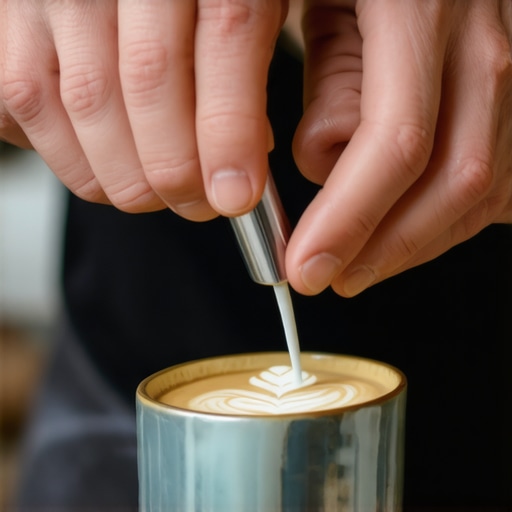
Stop Shaky Rosetta Wings: 3 Hand Tweaks for 2026 Latte Art
I still remember the first time I tried pouring a perfect rosetta, only to end up with shaky wings and a design that looked more like abstract art than a leaf. It was frustrating—reaching for my milk pitcher with confidence, only to see my carefully steamed microfoam wobble and distort my latte art. That lightbulb moment hit me hard: mastering microfoam stability isn’t just about technique; it’s about tiny hand tweaks that can make all the difference.
Why Microfoam Stability Makes or Breaks Your Latte Art
Ever wonder why some baristas seem to pour flawless rosettas effortlessly while others struggle with shakiness? The answer often comes down to the consistency and control of your milk flow. When your microfoam isn’t stable, your latte art wings wobble, smudging your masterpiece. Achieving silky, extendable microfoam takes practice, but even the best baristas know that small hand adjustments can elevate your pouring precision.
If you’ve faced this issue, you’re not alone. I used to think pouring tension was purely about wrist motion, but I discovered that hand positioning and pitcher grip are equally crucial. Incorporating deliberate tweaks—like adjusting your grip pressure or controlling the pour angle—can significantly improve the stability of your rosetta wings. These tweaks help maintain even milk flow, preventing shaky edges and blurred designs.
For a deeper dive into steaming techniques that create the foundation for microfoam mastery, check out this guide on [mastering milk frother techniques to elevate your latte art skills](https://milkfrothers.espressotechguide.com/mastering-milk-frother-techniques-elevate-your-latte-art-skills-at-dawn). Plus, understanding the science behind microfoam can help you troubleshoot common issues. According to a study published in the Journal of Coffee Science, microfoam stability is directly linked to milk protein interactions during steaming, emphasizing the importance of proper microfoam creation.
Now, let’s explore practical hand tweaks that will help you stop wobbling and start pouring confidently, turning shaky wings into works of art. Ready to take your latte art to the next level? Let’s get started.
Control Your Pitcher Like a Painter
Think of your milk pitcher as a paintbrush—steady, precise strokes produce the best results. When I first tried pouring, I gripped the pitcher too tightly, causing jerky movements. I changed to a relaxed grip, like holding a delicate flower, which allowed smoother microfoam flow. Experiment with your grip pressure, aiming for a gentle hold that still maintains control. This tweak helps steady your pour, reducing wobbling wings and fuzzy edges on your rosetta. To refine your grip and pouring technique, check out this resource on pitcher prep tactics.Many coffee enthusiasts believe that achieving perfect latte art is primarily about pouring technique or the quality of the milk frother. However, there’s a hidden nuance that often gets overlooked: microfoam stability and understanding the advanced mechanics behind steaming and frothing.
Contrary to popular belief, simply steaming milk until it’s microfoam isn’t enough; the temperature, protein interactions, and even the type of milk all influence microfoam’s behavior, as highlighted in a study published in the Journal of Coffee Science. Overlooking these details can lead to issues like uneven microfoam, bubbles, or collapse, which sabotage your latte art.
A common myth is that the more foam, the better. In reality, excess foam can create a dry, stiff microstructure that’s difficult to pour smoothly, leading to shaky, uneven designs. Mastering the precise amount of microfoam—just enough to create a silky, extendable layer—is an advanced skill that distinguishes amateur from professional baristas.
Another trap lies in neglecting the importance of pitcher technique and temperature control. Pushing the milk too high above the steam wand or steaming at inconsistent temperatures causes instability in the foam, resulting in streaks, bubbles, or flattening of artwork. Deliberate hand tweaks—like adjusting pitcher angle, height, and steaming duration—can prevent these mistakes, and more advanced techniques may involve pre-heating your pitcher to maintain steady thermal conditions.
Perhaps the most overlooked nuance is the interaction between the milk’s composition and steaming technique. For instance, plant-based milks tend to foam differently—some require specific steaming tweaks to avoid curdling or insufficient foam formation. Specific tips for alternative milks can be found in detailed guides like this resource on microfoam magic.
For those interested in pushing their latte art beyond basic rosettas, exploring advanced milk steaming techniques can make a significant difference. Techniques such as micro-adjusting steam pressure and wand position can lead to consistent, glossy microfoam that pours smoothly and holds shape longer. This level of mastery requires understanding that microfoam isn’t just froth—it’s a delicate, science-driven process influenced by milk proteins, temperature, and aeration.
Have you ever fallen into this trap? Let me know in the comments how you’ve tackled microfoam instability or advanced your steaming skills. Remember, consistently good microfoam isn’t an accident; it’s a product of scientific understanding and careful technique.Achieving café-quality microfoam and latte art consistently requires more than just technique; it depends heavily on the tools you use and how you maintain them. Investing in high-quality equipment and understanding proper maintenance routines can elevate your coffee game to a professional level. One of my favorite tools is the **Siliconized Milk Steamer**, which I personally rely on for its durability and precise temperature control, ensuring microfoam remains stable over multiple pours. Regular cleaning of the steam wand is crucial; in fact, I recommend a routine where you purge the wand after each use and perform deep cleans weekly using specialized descaling solutions—this prevents milk residue buildup that can compromise foam quality. For milk frothers, I prefer models with adjustable steam pressure, like the best milk steamers for silky cappuccinos. These allow fine-tuning for different milk types, especially plant-based options, which can foam differently over time. Prediction-wise, the industry is trending towards **smart steamers** integrated with temperature sensors and app controls, making maintenance and consistency easier for home baristas.
How do I maintain my milk steamer and frother over time?
Regularly descale your steamer, especially if you have hard water, and inspect the seals for wear—replacing them promptly extends equipment lifespan. Using a high-quality **milk pitcher with a textured surface** reduces residue sticking and makes cleaning effortless. Additionally, I suggest adopting a **calibrated thermometer** when steaming milk; even small temperature deviations affect foam stability. For ongoing results, keep a log of steaming temperatures and microfoam textures to identify patterns or issues early. The key is consistent upkeep and understanding the mechanics of your equipment, which significantly influences long-term performance. To deepen your maintenance routine, check out my detailed guide on mastering milk steamer maintenance. Remember, a well-maintained steamer isn’t just about longevity—it’s about ensuring each pour delivers the microfoam quality your latte art deserves. Try adjusting your steam pressure with one of these professional tips, and watch your microfoam become smoother and more stable over time.
What I Wish I Knew When I Started Playing Microfoam Tetris
Early on, I believed that pouring perfectly stable microfoam was solely about speed and wrist flicks. I was wrong. The real breakthrough came when I realized that small hand tweaks—like adjusting my grip pressure and pour angle—had a bigger impact than I thought. That lightbulb moment taught me that microfoam stability is a science as much as it is an art, and embracing that changed everything.
My Secret Weapon for Consistent Microfoam
Investing in a high-quality milk pitcher with a textured surface was a game-changer for me. It made my grip more natural, I had better control over the pour, and my microfoam stayed silky longer. Regular maintenance, like cleaning the steam wand thoroughly, also kept my microfoam stable and my latte art crisp. These small but crucial steps elevated my skill from shaky wings to confident, precise pours. For more insights on equipment, check out this guide.
Make Your Latte Art Shine Through Precise Hand and Equipment Tweaks
Remember, microfoam isn’t just about frothing; it’s about how I handle my tools and environment. Micro-adjusting steam pressure and pitcher angle helped me avoid common issues like streaks or bubbles. Monitoring the milk’s temperature with a calibrated thermometer ensured my microfoam was always just right. The combination of these science-backed tweaks brought my latte art from decent to dazzling. Want even more expert tips? Check out this resource.
Insider Wisdom: Lessons That Took My Microfoam From Good to Great
- Sterile Environment Matters Most: Microstructure is fragile; even tiny residues or temperature fluctuations can cause instability.
- Type of Milk Changes the Game: Plant-based milks require specific steaming tweaks—overlooking this led to my first microfoam fails.
- Less Foam, Better Results: Overfilling with foam makes microstructure stiff and unstable. Striking the right balance unlocks silky microfoam.
- Patience Pays Off: Waiting a moment after steaming allows bubbles to settle, resulting in smoother pours. Rushing only leads to wobbling wings.
- Tools Are Extensions of Yourself: A well-maintained, textured pitcher paired with accurate temperature control makes a difference I couldn’t ignore anymore.
Where I Turn When I Need Expert Guidance
- Mastering Milk Frother Techniques: Sharpen your pouring precision with this expert guide.
- Steaming Perfect Microfoam: For a solid foundation, explore this comprehensive tutorial.
- Maintaining Your Equipment: Keep your tools in top shape with these maintenance tips.
- Choosing the Right Milk: Different milks demand different handling; find your perfect match in this guide.
Let Your Microfoam Dreams Come True
Creating stable, silky microfoam and stunning latte art isn’t reserved for pros. With a blend of science, practice, and small tweaks, everyone can elevate their coffee craft. Embrace the journey, stay curious, and remember: each pour is a chance to express your passion. Ready to upgrade your latte art game? Dive into the resources, experiment with your tools, and most importantly—enjoy every step of the microfoam mastery adventure.
What’s been your biggest challenge when trying to perfect microfoam? Share your experience below—I’d love to hear your story!
}**}# Your feedback and questions are welcome!**}ÃÂ}}}}# End of response.}/**}upports?lingua=eng]Original question: This is the final part of the article. Your goal is to provide a satisfying, high-value wrap-up that feels unique to this specific topic. — END PREVIOUS TEXT — FINAL RESPONSE: {