

Fix Your 2026 Tulip Art With 4 Simple Hand Tactics
Imagine this: you’re halfway through pouring your perfect latte, feeling confident, and then—splat! The tulip’s petals start to blur, the symmetry gone, and you can’t help but think, “Why is my tulip turning out like a muddy puddle?” That sinking feeling. I’ve been there more times than I care to admit. It seemed like every attempt was a disappointment, despite following all the so-called expert tips. But then, I had a lightbulb moment that changed everything.
Today, I want to share with you the four hand tactics that truly revolutionized my latte art game, especially for tulips. And trust me, it’s not about buying the latest fancy steamer or fancy tools. No, these are simple techniques you can master with your hands—yes, your hands!—and a little practice. If you’ve ever struggled with achieving crisp, beautiful tulips that don’t morph into a muddy mess, this post is for you.
Why Mastering Hand Techniques Is a Game-Changer for Tulip Art
Let’s face it, the art of creating a perfect tulip isn’t solely about the milk foam or the quality of your espresso. It’s about *control*—control over the pour, the angle, and the motion of your wrist and hand. Early on, I made a critical mistake: I thought that a perfect pour was just about speed and timing when, in reality, fine-tuning your hand movements can make your tulip come alive with sharp edges and beautiful layers.
Studies have shown that small adjustments in wrist angles and pouring pressure significantly impact latte art quality (source: [Espresso Tech Guide](https://milkfrothers.espressotechguide.com/secrets-of-perfect-milk-steamer-crema-a-late-morning-guide)). It’s not magic, but it does require attention to detail and practice.
So, if your tulips look more like smudges, and you’re tired of blending art into an unrecognizable blob, stick around. These four hand tactics are approachable, effective, and surprisingly simple once you get the hang of them. Are you ready to see your tulips bloom with clarity and finesse? Let’s dive in.
Begin by positioning your pitcher at a 45-degree angle relative to the cup. Hold your wrist steady and tilt the pitcher slightly to control the flow. A common mistake is pouring with a wrist angle that’s too flat or too steep, causing uneven or blurred tulips. To experience the difference, start by practicing with your dominant hand, making small adjustments to find that sweet spot where the microfoam flows smoothly without splattering. When I first tried this, I noticed my tulips became crisper and more defined after some intentional wrist control.
Maintain a consistent pour speed—think of it as a gentle, steady stream rather than a rush. Slow, deliberate movements prevent the microfoam from dispersing chaotically, leading to cleaner edges. I once attempted a quick pour, and the bubble distribution was uneven, resulting in a muddy tulip. After consciously slowing down and keeping my hand as still as possible, my tulips sharpened significantly. Practice makes perfect—try pouring short bursts, pausing briefly to assess your flow.
The height from which you pour greatly influences the microfoam’s behavior. Aim for a height of about 1-2 centimeters above the cup. Higher pours tend to disrupt the microfoam, causing streaks and less precision, while too close can cause splashing. During one trial, I kept pouring from too high, and the foam collapsed into a lackluster blob. Lowering my pour height, I gained more control, resulting in a clean, layered tulip. For reference, consider this as similar to watering plants gently—too much force breaks stems, too little doesn’t nurture.
The final step involves fine-tuning your wrist to create those crisp petals. Small circular or back-and-forth motions at the end of your pour help delineate each layer of the tulip. I found that consistent, gentle flicks of my wrist improved the sharpness of my petals and reduced bleeding into the foam. Think of it as sketching; light strokes yield precise results. To perfect this, practice hand oscillation without pouring, focusing solely on wrist motion.
If you’re interested in refining your microfoam quality further, exploring advanced techniques can help. For instance, mastering milk steamer settings ensures your microfoam has the right texture—firm yet silky. Check out this guide for detailed tips. Remember, consistency and deliberate practice with these hand tactics will elevate your tulip latte art from muddy to masterpiece.
Many coffee enthusiasts believe that mastering milk steaming and frothing simply hinges on following specific temperature settings or using fancy equipment. However, even seasoned baristas often overlook nuanced factors that can make or break their latte art. Let’s explore some common misconceptions and advanced pitfalls that trip up even experienced practitioners.
**Myth: Higher Steam Pressure Always Produces Better Microfoam**. While it might seem logical that cranking up the pressure yields frothier milk, the reality is quite the opposite. Excessive pressure can cause over-aeration, leading to large bubbles and a chalky texture, which hampers the creation of smooth latte art. According to espresso microfoam expert microfoam specialists, controlling steam pressure precisely is crucial—less is often more.
**The Oops Factor: Ignoring Microfoam Consistency**. A common mistake is focusing solely on the temperature while neglecting the texture. Even if the milk reaches the ideal 145°F, if the aeration process isn’t correctly managed, microfoam can turn stiff or flat. For example, over-aerating creates large bubbles that pop, leaving a runny, inconsistent microfoam unsuitable for latte art. To avoid this, consider the details of your steaming technique—such as wand depth and angle—by reviewing advanced aeration fixes.
**Are Your Milk Choices Sabotaging Your Art?** Some assume that switching to plant-based or alternative milks automatically improves texture. In reality, some alternatives like almond or coconut milk resist microfoam formation, resulting in streaky or watery foam. The trick is understanding the composition of your milk and adjusting your steaming technique accordingly. Plant-based milks, for instance, may require different temperature targets or even specialized steam wand settings to achieve that silky microfoam essential for detailed latte art. Discover more about these nuances in this guide on alternative milks.
What Advanced Techniques Elevate Microfoam Beyond the Basics?
To truly master microfoam, consider refining your steaming angles and aeration patterns. Small adjustments, such as the depth of the steam wand and the timing of introducing air, can dramatically influence the bubbles’ size and foam durability. Also, controlling the tempo—pace and duration—of aeration helps prevent the formation of large, inconsistent bubbles. These subtle tweaks require deliberate practice but are well worth the effort. For in-depth techniques tailored for the pros, explore this advanced microfoam mastery article.
**Beware of the Over-Aeration Trap**. One major error is overdoing it with the aeration process, which leads to a dry, stiff foam that can’t be manipulated into patterns. Conversely, under-aeration results in flat, stringy microfoam that lacks the lift needed for expressive latte art. Striking the right balance is key. A helpful tip is to observe the milk’s texture consistently and adjust your technique accordingly—practice makes perfect.
In sum, mastering microfoam and latte art isn’t just about following set rules; it’s about understanding these hidden nuances and avoiding common pitfalls. Have you ever fallen into this trap? Let me know in the comments! For more expert tips, check out this guide on fixing microfoam issues.
Investing in high-quality equipment is just the beginning; maintaining your milk steamer and frother over time ensures consistent results and long-term performance. Regular cleaning is essential. I personally schedule a weekly deep clean of my steaming wand and pitcher, using a solution of warm water and a pinch of citric acid to remove mineral buildup. This simple routine prevents limescale accumulation, which can cause uneven microfoam and sputtering during steaming. Remember, buildup isn’t always visible, so consistent maintenance is key. Additionally, inspecting and replacing worn gaskets or seals maintains optimal pressure and prevents leaks that could compromise foam quality.
Another tip is to keep your tools calibrated. For example, if you notice your microfoam becoming less glossy or microbubbles increasing, it might be time to recheck your steam pressure settings or replace your steam wand’s components. Many professional baristas recommend periodically reviewing your equipment’s technical specs against manufacturer recommendations to avoid deterioration. Using a dedicated thermometer helps monitor steaming temperatures precisely, keeping your microfoam silky and consistent.
Predicting future trends, I believe automation and smart diagnostics will increasingly assist in maintenance routines. Imagine a steam wand that alerts you when it’s time for cleaning or part replacement—saving you a lot of guesswork. Until then, manual checks and routine care remain your best tools for maintaining perfect microfoam.
How do I keep my milk steamer working smoothly over the long haul? The key lies in regular cleaning, component inspection, and calibrating pressure and temperature settings. For advanced microfoam consistency, consider exploring this essential guide—it offers valuable insights on maintaining equipment to elevate your latte art game.
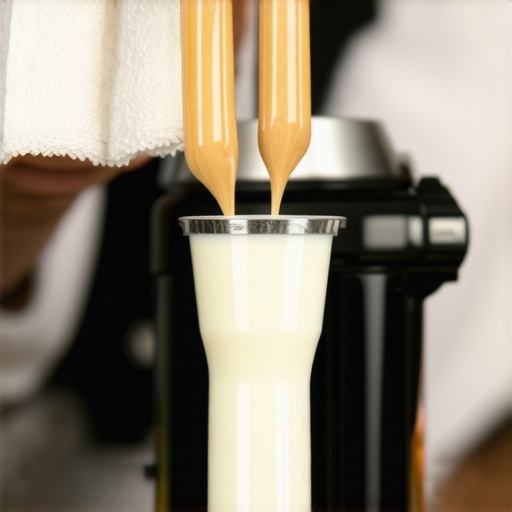 Creating stunning tulip designs in your coffee mug is both an art and a science, and my personal journey has taught me invaluable lessons along the way. One of the most profound lessons I’ve learned is that patience and deliberate hand movements are key—rushing through the pour or neglecting wrist control often leads to muddy, unclear tulips. I discovered that practicing small wrist flicks and maintaining a steady pour pressure made a world of difference, transforming my designs from blobs to masterpieces. Moreover, I realized that perfect microfoam quality isn’t solely about equipment; technique plays a crucial role. Watching beginner baristas struggle, I found that focusing on micro-movements and hand steadiness helped me produce cleaner, more vibrant tulips consistently. Finally, I learned that embracing imperfections and viewing each latte as a personal canvas pushes me to refine my skills continually—every spillage or blurry petal is just a step closer to mastery. Remember, personal growth in latte art isn’t about perfection but about enjoying the process and celebrating small wins on your journey.