

Stop Shaky Pours: 5 Fixes for Cleaner 2026 Latte Art
It was a morning just like any other—except today, my once-perfect latte art looked more like abstract graffiti than a sleek rosette. I traced my pour, trembling ever so slightly, and realized I was battling a stubborn ghost: shaky pours sabotaging my latte art. Every barista, amateur or pro, hits that frustrating moment when the microfoam refuses to cooperate, and your beautiful design turns into a splatter.
But what if I told you there’s a way to banish those shaky pours and craft cleaner, crisper latte art in 2026? Today, I’m going to share the fixes that transformed my shaky pour fiasco into consistent, cafe-quality latte art. Whether you’re chasing that perfect heart or rosette, these tips can make a real difference.
Why Shaky Pours Are a Common Hurdle and How to Fix Them
One thing I’ve learned over years of experimenting with steamers and milk frothers is that even minor hand tremors can ruin an entire pour. But surprisingly, many of us overlook simple adjustments that could stabilize our technique. My early mistake was rushing my pour, thinking speed was everything—but in reality, control and stability play a bigger role. It’s like learning to ride a bike: balance comes first.
According to coffee expert James Hoffmann, controlling the pour rate and angle can drastically improve microfoam integration, resulting in cleaner latte art. He emphasizes that consistency and precision are more vital than sheer speed or strength. This was my lightbulb moment: fine-tuning my technique, specifically focusing on how I hold and move my pitcher, led to immediate improvements.
Are shaky pours ruining your coffee art efforts more often than you’d like? You’re not alone. Luckily, a few targeted tweaks can help you master the art of stability. If you’re eager to turn your wobbly designs into sharp, professional-looking latte art, stay tuned—I’ll walk you through the exact fixes that made all the difference for me. Plus, check out some related insights to help you perfect your milk microfoam and achieve that silky smoothness every barista dreams of.
Stabilize Your Pouring Grip
Start by gripping the pitcher with a relaxed but firm hold, akin to holding a pen. Keep your wrist steady and avoid gripping too tightly, which can introduce tremors. I remember a time when I clenched my hand so tightly that my pour wobbled all over the cup—once I loosened my grip, my latte art immediately sharpened. Practice this grip until it feels natural, ensuring minimal movement during your pour.
Perfect Your Pour Height and Angle
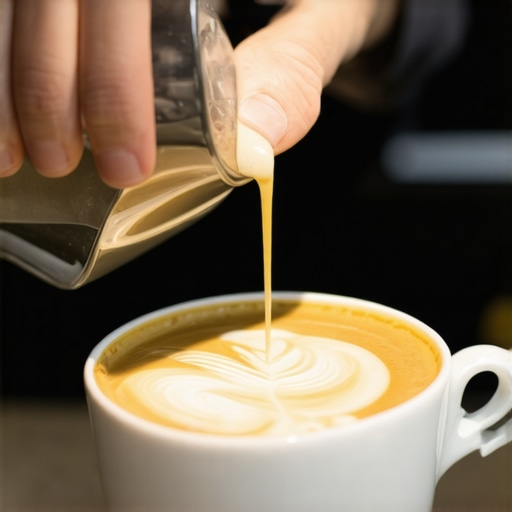
Holding the pitcher about 2-3 inches above the cup is ideal. Position the pour at a 45-degree angle to control the flow smoothly. Think of pouring like gently dripping paint onto a canvas—too high, and the flow becomes splattery; too low, and it drips too fast or misses the target. During my last attempt, lowering the pitcher just a bit helped me produce a much cleaner heart shape. Adjust your height and angle gradually, noting how each change impacts your microfoam flow.
Control Your Pour Speed for Consistency
Pour slowly and steadily to maintain microfoam stability. Rushing causes turbulent flow, which shakes the microfoam and ruins the design. I set a timer for 10 seconds while pouring to develop a controlled pace—this took practice but paid off in cleaner patterns. Think of this step like watering delicate plants; gentle, consistent streams keep everything even and manageable. Keep your wrist steady and avoid jerky movements to prevent wobbling.
Focus on the Pitcher Movement
Once your base circle forms, tilt the pitcher slightly closer to the cup to create your design. Use subtle wrist movements rather than whole-arm sways, similar to writing with a fountain pen. During my attempt to craft a rosette, small flicks of my wrist guided the milk to form leaf-like layers. Practice slow, deliberate tilts to refine your designs and reduce unintended wobbling. Remember, fluid and controlled motion are key—any abrupt movement will disturb the microfoam.
Leverage Visual Cues During Pouring
Watch the microfoam as it flows onto the surface. A steady, thin stream results in sharp, crisp designs, while a thick pour causes blending or bleeding. I often focused on the ripple effect of the microfoam, adjusting my pour as I saw the pattern develop. This real-time feedback helps you dial in the pour rhythm and tilt angle—think of it as steering a bicycle; small corrections keep you on course.
Practice with Different Milk Types and Frothing Techniques
The consistency of your microfoam directly affects your pour stability. Thicker, velvety microfoam is easier to work with than thin or grainy foam. Experiment with various milk types—almond, soy, or cow’s milk—and adjust your steaming technique accordingly. I found that steaming oat milk too aggressively introduces bubbles, making my pour shaky; mastering the microfoam mastering guide can help you get the silky texture needed. Remember, smoother microfoam responds better to controlled, slow pours, reducing wobbling and enhancing design clarity.
Tackle Common Pouring Mistakes
To prevent wobbles, avoid pouring from too high, rushing your pour, or making jerky pitcher movements. Instead, focus on consistency and mindfulness during each pour session. If your pours wobble, revisit your grip, height, and speed, and refine incrementally. Incorporating these precise, deliberate actions can turn your shaky attempts into professional-quality latte art.
 Many coffee enthusiasts believe that creating perfect latte art is simply about pouring milk into espresso with a steady hand. However, this oversimplification masks nuanced techniques and common pitfalls that even seasoned baristas sometimes overlook. One widespread myth is that higher-quality milk frothers automatically produce superior microfoam. In reality, the key lies in mastering steaming techniques and understanding the characteristics of different milk types. For instance, dairy milk like whole milk often yields richer foam compared to plant-based alternatives, but the steaming process must be tailored accordingly. Rushing the steaming process or steaming milk at too high a temperature can cause microfoam to become grainy or collapse, sabotaging your latte art. According to expert barista training, achieving silky microfoam requires precise control over steam wand angle, position, and pressure, rather than just high power or speed. Have you ever fallen into this trap? Let me know in the comments. Another common misconception is that cappuccinos demand stiffer foam than lattes. Actually, the texture varies; cappuccinos benefit from denser foam, but too dry or airy microfoam results in dull, unsharp designs. For advanced practitioners, a critical question arises: How does protein content in milk influence microfoam stability, and what steaming adjustments are necessary? Studies indicate that milk with higher protein levels creates more stable foam, allowing for intricate latte art even at high pour rates. Understanding this can help you refine your technique for different milk varieties. Remember, microfoam quality hinges not only on the equipment but also on your steaming finesse. For comprehensive insights on refining milk texture and avoiding common mistakes, I recommend exploring detailed guides like [Master Microfoam Milk Frother Tips for Flawless Lattes](https://milkfrothers.espressotechguide.com/master-microfoam-milk-frother-tips-for-flawless-lattes-today). Ultimately, dispelling these myths and embracing nuanced techniques will elevate your coffee artistry beyond amateurish attempts. Keep practicing, stay curious, and refine your approach for consistently stunning latte art.Maintaining your equipment is crucial for consistently stunning latte art. The backbone of flawless microfoam lies in both the quality of your tools and how well you care for them. Personally, I rely on high-precision milk steamers like the [top-tier microfoam steamers](https://milkfrothers.espressotechguide.com/7-pro-grade-milk-steamers-for-glassy-microfoam-2026-reviews), which offer adjustable pressure control to fine-tune foam texture. These steamers prevent overheating and inconsistent frothing, ensuring your microfoam remains velvety over time. Using a dedicated milk pitcher made from stainless steel with a calibrated spout helps maintain consistent pour angles, translating to cleaner designs on every attempt. Regular cleaning is non-negotiable; milk residues can clog steam wands and degrade foam quality. I recommend cleaning after each session with a descaling solution, especially if you notice a decrease in steam pressure or foam quality. For long-term results, investing in a calibrated thermometer and a digital pressure gauge allows precise steaming, helping prevent common issues like scalded milk or inconsistent foam consistency, per expert advice from [master microfoam techniques](https://milkfrothers.espressotechguide.com/master-microfoam-milk-steamer-tips-for-perfect-latte-art). Prediction for the future suggests a rise in smart, automated steaming devices that monitor pressure and temperature in real-time, reducing user error significantly. How do I keep my frothing process reliable over time? The answer is a combination of quality tools and routine maintenance. Calibration checks should be part of your weekly routine; a simple test with a thermometer can reveal if your steaming temperature drifts above optimal ranges. Also, inspecting and replacing worn seals and gaskets in your steamer prevents performance drops. Upgrading your milk frother or steamer may seem costly, but it pays off by saving you time and improving your results. Remember, even a slight tweak like regularly replacing your silicone steam wand tips can make a significant difference in microfoam quality. If you’re eager to elevate your microfoam game, I strongly recommend trying the advanced techniques outlined in [microfoam mastery guide](https://milkfrothers.espressotechguide.com/master-microfoam-milk-frother-tips-for-flawless-lattes-today). Effective maintenance and the right tools are your allies in achieving café-quality latte art daily—so don’t overlook their importance.
Disguised Lessons in My Pouring Journey
One of the most surprising insights I uncovered was how much my mental state affected my microfoam control. Stress or rushing often led to unsteady pours, reminding me that patience and mindfulness are as vital as technique. I’ve learned that every shaky pour whispers a deeper lesson about focus and confidence, guiding me toward a steadier hand and sharper designs. Moreover, I realized that perfection isn’t about never wobbling—it’s about recognizing when to pause and adjust, turning mistakes into learning milestones.
Tools and Resources That Made a Difference
For anyone serious about elevating their latte art in 2026, investing in precise tools has been pivotal. I swear by the top-tier microfoam steamers that offer adjustable pressure controls, preventing over-steaming and inconsistencies. Supplement that with a comprehensive microfoam mastery guide to refine your steaming techniques. Lastly, a calibrated thermometer is indispensable, helping maintain the exact temperatures necessary for silky microfoam, a critical element for stable pours.
Ignite Your Passion for Perfecting Latte Art
Embrace the journey of mastering latte art in 2026 with patience and practice. Remember, every pour, wobble, and adjustment brings you closer to cafe-quality designs you can be proud of. If I can do it, so can you—so grab your pitcher, take a deep breath, and start creating magic in your own kitchen. The world of latte art awaits your unique touch, so don’t hesitate to make that first wobble count. Are you ready to turn your shaky pours into crisp masterpieces? Share your experiences below—I’d love to hear your story.