
Ultimate Guide to Milk Frother & Steamer Tips for Flawless Latte Art
Ever had that moment when you’re pouring a latte, and your microfoam turns out more like bubbly milk soup? I remember countless mornings frustrated over imperfect latte art, watching my attempts look more like abstract paintings than the precise hearts and rosettas I craved. It was a lightbulb moment for me—realizing that achieving cafe-perfect microfoam isn’t just about buying fancy equipment, but understanding how to master it. If you’ve ever faced similar struggles, you’re not alone, and I’m here to tell you that the journey from frothy mess to latte art masterpiece is entirely doable.
Why Mastering Milk Frother Techniques Changes Everything
For many of us, the secret lies in how we use our milk steamer and frother. It’s tempting to think that a high-end machine guarantees perfect foam. But trust me, early on I made a crucial mistake—focusing solely on temperature without paying attention to texture and design. According to barista experts, controlling steam pressure and milk temperature is essential, but equally important is developing a feel for creating creamy, microbubbly foam that holds shape. When I shifted my focus to technique, my latte art significantly improved, and I knew I was onto something special. Want to learn the techniques I wish I knew earlier? The right tips can help you craft microfoam that’s dense yet smooth, making your latte art anything but accidental. Curious? Let’s dig into what really makes a difference.
Is Microfoam Magic Overhyped?
I used to think awesome latte art was just about aesthetics, something reserved for the pros. My early mistake? Skipping proper training on steaming milk—thinking that just heating it up would suffice. It’s quite common to assume that any frothing tip would do the trick. However, a study by Specialty Coffee Association highlights that microfoam’s texture is what allows for those intricate designs. When I finally focused on mastering microfoam—a process requiring patience and the right technique—the results were mind-blowing. So, if you’ve ever wondered whether all the hype about microfoam is justified, I promise: it absolutely is. Ready to transform your coffee game? Stay tuned for step-by-step instructions to elevate your latte art skills with practical, achievable tips.
Get Your Milk at the Right Temperature
Start by heating your milk slowly, aiming for about 140°F (60°C). Use a thermometer and avoid rushing, as rapid heating causes larger bubbles and less control. I once poured cold milk straight from the fridge into my steamer, resulting in uneven microfoam—since then, I’ve learned to warm it gradually. Proper temperature ensures consistency and helps create smooth microbubbles, essential for latte art. If you’re unsure about optimal temperatures, check out this guide.
Create Microbubbles with Controlled Steaming
Position the Steam Tip Correctly
Position the steam wand just below the surface of the milk, at a slight angle. When I first attempted steaming, I kept the wand too deep, resulting in frothy mess. Keeping it close to the surface introduces tiny bubbles, creating that velvety microfoam. As the milk rises and warms, gently lower the wand to keep the motion steady. Think of it like gently whipping cream—slow, controlled movement yields the best results. For detailed wand positioning, I recommend watching
Knead the Milk Like Dough
Once the milk reaches the target temperature and has a glossy surface, turn off the steam. Now, with a swirling motion, mimic kneading dough—this helps eliminate larger bubbles and integrates the microbubbles evenly. I recall one time, after over-frothing, my foam was airy and lacked shape. A gentle swirling and tapping the pitcher on a countertop made the foam velvety, perfect for latte art. Maintain a steady motion to develop a smooth, paint-like texture—this is the key to creating detailed designs. For more on this technique, see advanced tips here.
Achieve the Perfect Pour
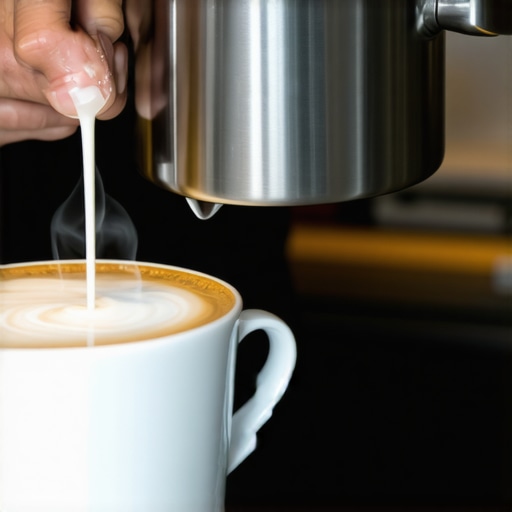
Holding the pitcher at a slight angle, pour steadily from a height of about 2 inches, then lower closer to the cup surface as the foam rises. This creates a contrast between the cream and espresso, enabling intricate latte art. Initially, I tipped the pour too fast, causing the foam to splash. Practicing slow, deliberate pours allowed me to control the flow and produce cleaner patterns. Think of this step as painting with microfoam—a slow, controlled pour delivers precision. Want to see the difference? Check out this visual guide.
While many coffee enthusiasts focus on the basics of milk frothing, there’s a plethora of nuanced misconceptions that can hinder even seasoned baristas from achieving their desired microfoam. Let’s dig deeper into some of these pitfalls and shed light on the overlooked nuances that separate good from exceptional latte art.
One widespread myth is that high-end equipment guarantees perfect microfoam. In reality, even top-tier machines can produce subpar results if the technique is flawed. Many assume that temperature alone is the key, but as research from the Specialty Coffee Association indicates, texture consistency and bubble size are paramount. An often-overlooked mistake is neglecting to adjust the steaming position for different milk types; a generic approach leads to uneven microfoam. Using advanced steaming techniques can help you tailor your process for optimal results.
What advanced flaws do even experienced baristas overlook?
Experienced baristas might think that once they’ve mastered basic steaming, more intricate nuances no longer matter. However, subtle factors like the angle of the steam wand, the milk’s initial temperature, and even the pitcher shape can significantly impact microbubble formation. For instance, using a pitcher with a wider base facilitates better heat distribution, enabling more consistent microfoam. Additionally, failing to purge the steam wand thoroughly before steaming can introduce air bubbles, disrupting the microfoam’s delicacy. According to expert advice, paying attention to these minute details can elevate your milk craft from competent to exceptional. Remember, the difference lies in the details—don’t let common pitfalls trip you up. For tailored guidance, connect with seasoned professionals through contact pages.
Beware the trap of rushing the process; patience ensures that microbubbles develop evenly, creating that silky texture essential for detailed latte art. Avoid the mistake of pouring from too high or too fast, which distorts the microfoam’s structure. Mastering controlled pouring techniques complements your steaming skills, transforming good quality microfoam into a canvas for intricate designs. For more insights on refining your pouring skills, see advanced pouring tips. Let’s elevate our microfoam game by prioritizing quality over speed and embracing the delicate nuances that define a truly professional coffee craft. Have you ever fallen into this trap? Let me know in the comments.
Achieving cafe-quality microfoam and latte art is an ongoing journey that requires not only skill but also the right tools and consistent maintenance. To keep your equipment in top condition, investing in high-quality milk steamers and frothers is crucial. I personally recommend the Breville Barista Express — its durable build and precise steam wand allow me to perfect microbubbles every time. Additionally, a reliable milk thermometer, like the ThermoPro TP17, ensures I stay within optimal temperature ranges, preventing overheating and maintaining microfoam consistency. Ensuring your equipment is clean is equally vital; regular wiping of steam wands and descaling of boilers prevents buildup that could compromise foam texture. In the future, I see smart appliances integrating self-cleaning cycles and real-time monitoring to simplify maintenance—making microfoam perfection more accessible.
How do I maintain my milk steamer and frother over time?
Consistent maintenance begins with routine cleaning after each use. For steam wands, a quick purge with steam helps remove milk residue—this practice prevents clogging and preserves steam quality. Deep cleaning the entire unit weekly using descaling solutions like Millyard ensures scale deposits don’t impair performance. I also recommend periodically inspecting the steam tip for blockages and replacing worn parts as suggested by the manufacturer. Proper storage, avoiding humidity and dust, extends the lifespan of your equipment. According to a detailed guide by Espresso Tech Guide, regular upkeep sustains foam quality over months and years. Remember, consistent care not only prolongs your gear’s life but also guarantees your microfoam remains silky and perfect every time. Why not try implementing a weekly cleaning routine with descaling and see how much your microfoam improves? Elevate your home barista game—small steps lead to big results. 
Unspoken Lessons from a Coffee Enthusiast
One of the most overlooked truths in perfecting microfoam is realizing that consistency beats shortcuts. Every time I skipped gentle steaming or neglected thorough cleaning, my foam suffered, reminding me that small habits make a big difference. Additionally, embracing patience, rather than rushing to finish steaming or pouring, unlocked the beauty of intricate latte art designs. The journey taught me that precision, care, and attention to detail—often in the smallest steps—are what truly elevate your microfoam mastery.
My Go-To Resources for Coffee Crafting Excellence
For anyone serious about elevating their microfoam skills, I highly recommend this comprehensive guide—it’s packed with practical tips that transformed my steaming technique. Additionally, these expert tutorials broke down complex concepts into actionable steps. Lastly, engaging with seasoned baristas on the community page kept me motivated and inspired to refine my craft every day.
Take Your Coffee Art Beyond the Basics
If you’re eager to craft microfoam that turns heads and impresses every time, remember that expertise is built on continuous improvement. The future of coffee mastery lies in embracing the nuances—perfecting steaming angles, controlling temperatures, and pouring with intent. Why not challenge yourself to experiment with different milk types or try new pouring techniques? Every tiny detail you fine-tune adds a personal touch that elevates your latte art from good to extraordinary. So, what’s the next microfoam milestone you’re aiming for? Share below and let’s grow together!
Would you like some tailored tips or resource suggestions? Let me know how I can support your coffee journey!