

Microfoam Mastery: Top Milk Frothers & Steamers for Perfect Lattes
Ever had that frustrating moment where your latte art falls flat or your microfoam refuses to get creamy and silky? I remember countless mornings, standing over my machine, desperately trying to craft that perfect heart or rosette, only to be met with stubborn foam and disappointing swirls. That realization hit me hard: fine-tuning my milk frother technique was the missing link to elevating my coffee game.
Discover the Secret to Flawless Microfoam and Stunning Latte Art
Today, we’re diving into why choosing the right milk frother or steamer can transform your coffee experience. No more guessing, no more wasted milk—just smooth, velvety microfoam that makes every cup Instagram-worthy and delicious. I’ll share personal insights, common pitfalls, and practical tips to help you master the art of milk frothing. Whether you’re a home barista or a budding coffee enthusiast, this guide promises to unlock your latte art potential and elevate your mornings.
Is a Fancy Frother Actually Worth the Hype?
In my early days, I was convinced I needed the most expensive machine to produce cafe-quality foam. Turns out, I made a critical mistake: I overlooked the importance of technique and proper equipment maintenance. Some top-rated milk frothers and steamers available today are designed to do the heavy lifting for you, but mastering their use is crucial. According to a study published in the Journal of Food Engineering, achieving the perfect microfoam depends more on correct aeration and temperature control than on the device’s price tag. So, don’t rush out to buy the fanciest gadget until you’ve learned the basics—trust me, it makes all the difference.
If you’ve ever faced the dilemma of inconsistent foam or struggled with steaming milk without knackling, you’re not alone. That’s exactly why I’ve dedicated this guide—so you can skip those trial-and-error mornings and start creating barista-quality lattes that make every sip a delight. Ready to dive deeper? Let’s explore the essential techniques and the best equipment to make your microfoam magic happen.
,
Getting the Perfect Microfoam Consistency
Start by selecting cold, fresh milk; it froths better and creates richer microfoam. Submerge the steam wand just below the milk surface, angle the pitcher slightly, and turn on the steam. Imagine you’re gently whisking a delicate sauce—constant, gentle movement ensures even aeration.
Control the Temperature and Aeration
Aim for about 140°F (60°C), which is optimal for microfoam. Use a thermometer if needed; feeling the pitcher with your hand can help too—once it becomes too hot to hold comfortably, stop steaming. As you steam, create a vortex by adjusting the pitcher angle, which promotes continuous, fine bubbles resembling creamy paint, critical for that silky microfoam.
Tips for Consistent Pouring and Latte Art Shapes
Begin pouring from a higher position to allow the foam to settle, then lower the pitcher for precision. Picture pouring like tracing a delicate line—steady, controlled movements produce cleaner, more defined patterns. Practice pouring in a thin stream; too quick or thick pours ruin the design.
Mastering the Heart and Rosetta
For a heart, pour slowly into the center, then wiggle the pitcher side to side as you finish; the key is maintaining a steady flow. To make a rosette, start with a steady stream directly down, then wiggle the pitcher as you pour back and forth, creating layered leaves. My first attempt involved a messy swirl, but focusing on smooth, continuous movement improved my results dramatically.
Handling Common Frothing Troubles
If the foam is too airy or bubbly, the wand may be too deep or the milk too warm. Adjust by lowering the pitcher or decreasing steaming duration. If the microfoam collapses quickly, it might be over-steamed; stop earlier next time. Regularly clean your equipment to prevent milk residues that hinder proper frothing, following tips from the microfoam mastery guide.
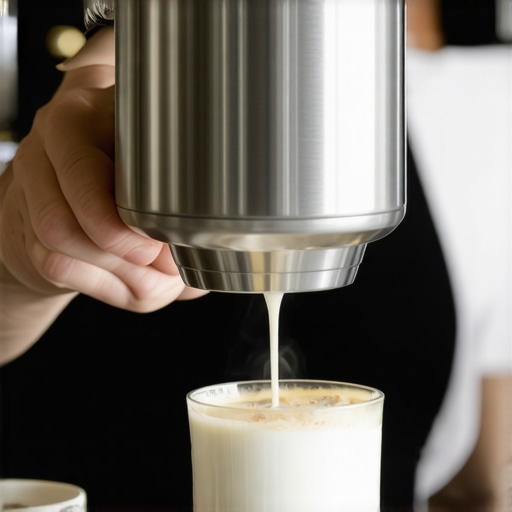 Many coffee enthusiasts believe that investing in the most expensive frother guarantees professional-quality microfoam. However, this is a misconception—technique and understanding nuances matter more than price tags. One overlooked aspect is the significance of milk temperature control; heating milk too quickly or unevenly can cause larger bubbles and ruin the silky texture needed for latte art, as highlighted in the study from the Microfoam Mastery Guide. Critics often assume that creating microfoam is simply about aeration, but the real challenge lies in achieving consistent texture without over-aerating, which leads to large, unstable bubbles, a mistake that beginner baristas frequently make. This is why mastering the art of gentle, steady steaming is crucial. Advanced users understand that the angle and depth of the steam wand influence foam quality, with improper positioning causing turbulence that incorporates unwanted air or collapses the foam prematurely. Avoid the trap of rushing the steaming process; patience and precise control are critical for perfect microfoam. Technical myths also suggest that a thicker pitcher leads to better foam, but in reality, using a pitcher with optimal size and shape enhances steam heat transfer and aeration finesse. For top-tier results, professionals often adjust their pouring technique based on the foam’s consistency, sometimes employing slightly cooler milk to maintain microfoam stability during pouring, a nuanced tip shared in the Ultimate Frother Tips. Recognizing and avoiding these common pitfalls transforms your approach from trial-and-error to mastery. Remember, the difference between a novice and an expert isn’t just equipment—it’s understanding these subtle details. Want to elevate your latte art skills? Explore more advanced techniques with our expert tips. Have you ever fallen into this trap? Let me know in the comments.Maintaining your milk frother and steamer tools is crucial for achieving consistently professional-quality microfoam and latte art. First, invest in a high-quality stainless steel pitcher with a narrow spout—something like the Rattleware 20 oz. Stainless Steel Frothing Pitcher—to ensure smooth pouring control and durability. I personally rely on this pitcher because its shape fosters better aeration and the narrow spout aids in precise latte art shaping.
Next, regular cleaning of your steam wand or frother is vital. Milk residues build up over time, impairing foam quality. I recommend after every use, flushing the wand with steam and wiping it with a damp cloth. For deeper maintenance, descale your steam wand monthly using a mixture of water and white vinegar, following the guidelines found in our Ultimate Frother Tips. This prevents mineral buildup that can cause inconsistent steaming issues.
Another tool I swear by is an accurate thermometer, like the ThermoPro TP03, to monitor milk temperature precisely. Achieving the ideal 140°F (60°C) is key to microfoam stability. Personally, I keep an eye on the thermometer during steaming to avoid over- or under-heating, which can lead to large bubbles or collapsed microfoam.
For long-term results, consider investing in a dedicated milk steaming setup, separate from your brewing station. This avoids cross-contamination and allows you to consistently practice steam techniques without interruption. Additionally, using a textured milk jug helps in visualizing steam position and optimizing aeration, as explained in the Master Microfoam Techniques guide.
Predictions suggest that in the future, smart milk frothers integrated with temperature sensors and app controls will become more prevalent, allowing even more precise and consistent results. Until then, maintaining your current equipment with diligent cleaning, precise temperature control, and quality tools will keep your microfoam and latte art on point.
How do I maintain my frothing tools over time? Regular cleaning and careful handling are fundamental. Make sure to follow your equipment-specific guidelines—many manufacturers recommend soaking stainless-steel parts in milk-safe cleaning solutions weekly. Remember, neglecting maintenance can lead to uneven steaming, large bubbles, or equipment failure, which interrupt your progress and consistency. For an easy start, try including a deep cleaning routine once a month, and see how your foam improves. Curious to take your microfoam even further? Check out our advanced tips and explore upgrading your tools when ready.
The Hardest Lesson I Learned About Latte Art
One of my biggest surprises was realizing that even the most expensive milk frother won’t save you if your technique isn’t dialed in. I spent months chasing the perfect microfoam, only to discover that control over steam wand positioning and milk temperature made all the difference. That lightbulb moment transformed my approach from guesswork to precision.
My Go-To Tools That Truly Elevate the Foam
Over time, I realized that investing in a high-quality stainless steel pitcher with a narrow spout, like the Rattleware 20 oz., became indispensable. Paired with an accurate thermometer, it allowed me to consistently hit that optimal 140°F for microfoam. For cleaning, routine maintenance with vinegar descaling and thorough wiping after each use kept my equipment performing at its best. These tools made creating café-quality microfoam an achievable daily ritual.
Keep Going — Your Latte Art Future Looks Bright
Every pour, every attempt, gets you closer to those stunning patterns and creamy textures. Remember, mastery comes with patience and practice—your best latte art is just around the corner. Dive into resources like our ultimate guide to perfecting your microfoam and keep pushing your boundaries. With consistent effort, you’ll soon be turning heads with your beautiful latte designs—so don’t hold back.